From GTOs to Nationwide Mandate: The Real Reason FinCEN Reporting Matters
March 3, 2026
By Rynoh
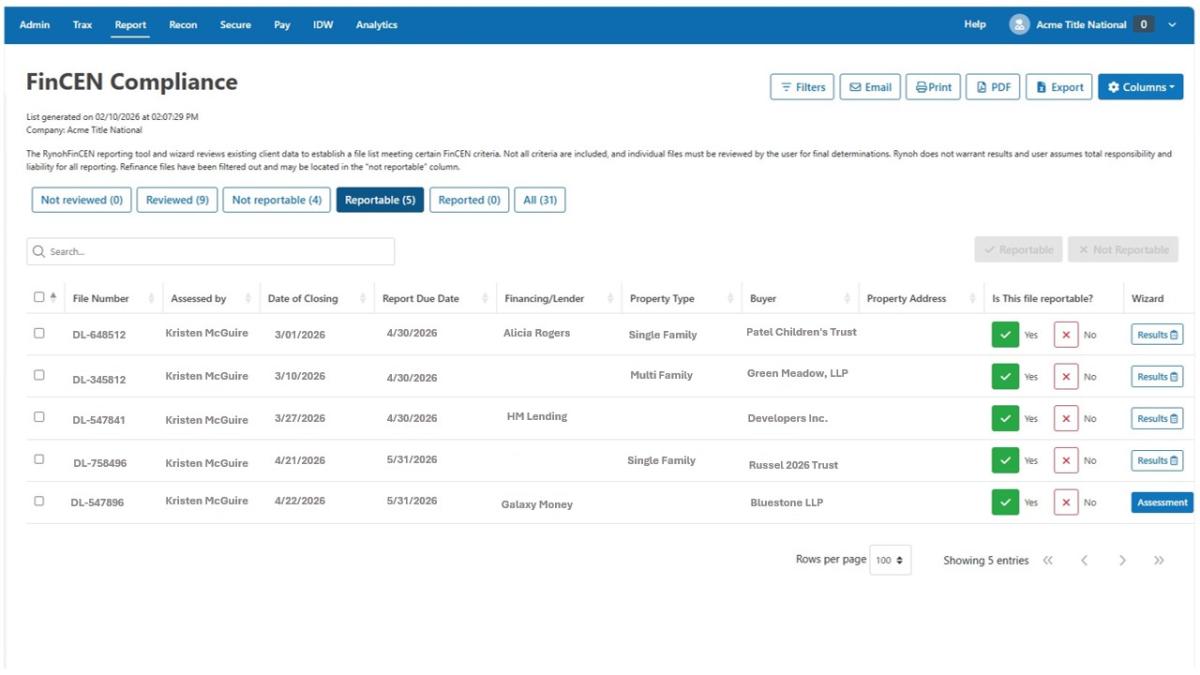
For many title and escrow professionals, FinCEN’s new residential real estate reporting requirements feel like one more heavy lift layered onto an already complex closing process. The industry understands the objective: increase transparency, deter illicit use of real estate, and close long-recognized gaps in anti-money laundering (AML) oversight. What’s harder to absorb is the day-to-day reality of collecting beneficial ownership data, navigating trust structures, managing certifications and submitting Real Estate Reports, all while keeping closings on track.
Because of that burden, it’s fair to ask whether all this effort actually matters.
To understand why the federal government made this a national mandate, it helps to look back at FinCEN’s Geographic Targeting Orders (GTOs). These were limited, city-specific reporting requirements that applied only in certain high-risk markets and only to specific types of all-cash residential purchases. As a result, many title and escrow professionals never encountered GTO reporting firsthand even though it quietly shaped today’s national rule.
What FinCEN learned from those GTOs is the reason this reporting is now national.
During the GTO program, FinCEN reported that 30% of GTO-reported transactions involved a beneficial owner or purchaser representative who had previously appeared in a bank-filed Suspicious Activity Report (SAR). That level of overlap strongly suggested the GTO reports were capturing higher-risk activity, not random transactions. In parallel, federal law enforcement agencies confirmed that GTO data was used to generate investigative leads, and the Government Accountability Office reported broad law-enforcement support for continuing and expanding the program.
In other words, the GTOs did exactly what they were designed to do by surfacing obscured ownership structures and cash flows that traditional AML controls often miss. Real estate transactions, particularly all-cash purchases through LLCs and trusts, had long fallen outside the reach of bank monitoring and SAR filing requirements. The GTOs demonstrated that targeted reporting could fill that gap, which is why FinCEN ultimately concluded that limited, city-by-city orders were no longer sufficient and expanded the framework nationwide.
That history helps explain the mandate. It does not make implementation any easier.
For title and escrow teams, the real burden is not the Real Estate Report itself, but the work that comes before it: determining whether a transaction needs to be reported, identifying beneficial owners, collecting accurate information from buyers and trustees, documenting exemptions and maintaining a defensible audit trail. Manual intake forms and ad hoc processes don’t scale and they pull experienced staff away from closing files.
If FinCEN reporting is now a permanent part of the business, the question becomes how to comply without sacrificing efficiency.
That’s where workflow-driven solutions like Rynoh’s FinCEN reporting module come in. Rynoh embeds FinCEN decisioning directly into daily operations, continuously reviewing transactions to identify those with reporting indicators, prompting early data collection, reading completed ALTA Buyer Information Collection Forms and guiding users through structured reporting steps. The system generates FinCEN’s Real Estate Report (Form 508C) with full audit logging, and automated submission to the BSA E-Filing System planned next.
Schedule a Demo
Compliance is mandatory, but inefficiency doesn’t have to be. Click here to schedule a product demo today.
To contact Rynoh, you can send an email at [email protected] or call 757-333-3760.
Contact ALTA at 202-296-3671 or [email protected].